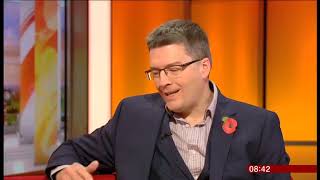
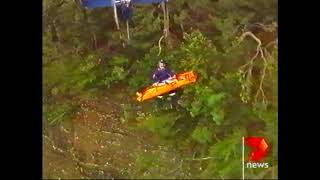
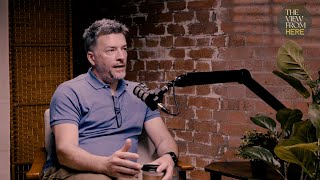
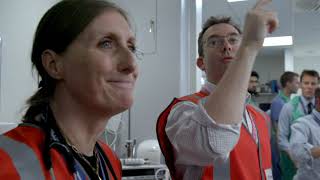
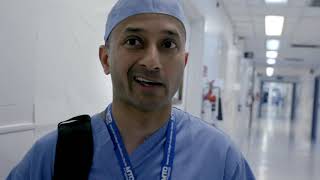
Dr. Morgan McMonagle has spent his career treating the worst injuries humans can sustain. As the surgeon on call during the Westminster Bridge Attack, London Bridge Attack, and Grenfell Tower Fire, he knows what mass casualty events look like. After a fellowship in Philadelphia treating 6–8 gunshot wounds per night, he understands urban violence. Training military trauma surgeons at Queen Elizabeth Hospital, he has seen combat injuries. Helicopter rescues in the Australian outback taught him emergency trauma under impossible conditions.
But when he volunteers for his first mission to Gaza in 2024, something doesn't fit the patterns he has learned across three decades. The injuries are different. The victims are overwhelmingly children. The precision of the weapons tells a story his surgical eye can't ignore: this isn't collateral damage — it's systematic.
He returns to Gaza twice more. Each mission deepens his understanding. A 13-year-old girl shot multiple times by an Apache helicopter — only in her limbs, never her torso. A pregnant woman shot through her uterus, the bullet passing through her fetus's heart. Children denied evacuation until they die. The forensic evidence is overwhelming.
Back in Waterford, Morgan begins studying for the bar. Not to become a lawyer — to understand how medical evidence becomes legal prosecution. How wounds can testify in international courts. How a trauma surgeon's clinical observations can help prove genocidal intent.
The Witness follows Morgan between operating theatres in Ireland and war zones in Gaza, as he transforms from surgeon to prosecutor, building the case that could change how the world sees what is happening to Gaza's children — one wound at a time.
I met Morgan at a medical conference while completing Everybody Knows, my feature documentary about global resistance to the Gaza genocide. I'd spent nine months filming resistance movements across four countries. Morgan's presentation cut through everything. While others theorised, he presented forensic evidence — and named what he was seeing with a precision and calm that told me immediately: this is someone worth ninety minutes of attention.
I spent a decade inside Portlaoise Prison making films with republican prisoners — learning never to use the camera to expose a subject, but to work with people until they expose themselves to themselves. Morgan understands this instinctively. He takes direction like a screen actor. He knows what the camera is for. That trust is why The Witness can go where other films have not.